Volumetric shrinkage in Unsaturated Polyester Resins (UPR) is an inherent phenomenon resulting from the combination of chemical polymerization shrinkage (the conversion of van der Waals distances to shorter covalent bonds) and thermal shrinkage (caused by temperature drop after reaching the exothermic peak). Failure to control this phenomenon leads to residual stresses, warpage, micro-cracking, and a decline in surface quality. Although the use of additives such as Low Profile Additives (LPA) is a common method to reduce this phenomenon, in many cases, shrinkage can be significantly reduced through proper resin design, control of reaction kinetics, and optimization of process conditions. These strategies can be examined in three main categories:
- Resin Structure Design
- Cure Kinetics Control
- Composite Design
1) Resin Structure Design
Control of Styrene Ratio: Styrene is used in unsaturated polyester resins as a reactive monomer and diluent. However, a significant portion of the system’s chemical shrinkage is related to the polymerization reaction of styrene. The higher the styrene content in the resin formulation, the higher the final network density and the greater the volume reduction of the system. Therefore, one of the simplest methods to reduce shrinkage is the controlled reduction of the styrene percentage in the resin formulation. Of course, this must be done in a way that the resin viscosity remains acceptable for manufacturing processes.
Increasing Resin Molecular Weight: One of the effective synthetic methods for reducing shrinkage is the relative increase in the molecular weight of the polyester chains during the resin synthesis stage. When polyester chains are longer, the number of active double bonds per unit volume decreases, and consequently, the extent of cross-linking reactions that compress the structure is reduced. In other words, by increasing the prepolymer molecular weight, the cross-link density in the final network becomes lower, and the system's volume change decreases.
Resin Molecular Design: Other strategies include the use of certain monomers or molecular structures with steric hindrance, as well as longer diacid/dialcohol chains. This approach, if chosen correctly, can prevent severe shrinkage and curing-induced stresses by altering the polymeric network architecture and its formation mechanism. In some systems, a portion of the styrene can also be replaced with other reactive monomers that induce less shrinkage during polymerization. Monomers with bulkier or more flexible structures, such as vinyl toluene or acrylic-based monomers, usually create less volume change during cross-linking. This approach is essentially a form of molecular system design aimed at reducing sudden structural densification during the curing reaction.
2) Cure Kinetics Control
Controlling Polymerization Speed: One of the key factors in the intensity of shrinkage effects is the speed of the curing reaction. If the polymerization reaction occurs too rapidly, the polymer network forms in a very short time, and the system will not have sufficient time to distribute the stresses caused by volume reduction. Conversely, if the reaction is conducted in a controlled and gradual manner, the stresses caused by shrinkage are better distributed within the material's structure. This is usually managed by optimizing the initiator/accelerator system and utilizing appropriate radical inhibitors to manage the pot life and the time to reach the exothermic peak. For instance, the quinone family, which is used as an inhibitor in unsaturated polyester systems, prevents the resin from reacting instantaneously or within a short timeframe by reducing the activity of reactive sites.
Staged Curing: The method of performing the curing process can also influence the system's shrinkage behavior. In many applications, using staged curing or gradual temperature increase can help reduce shrinkage-induced stresses. In this method, the gradual increase in temperature minimizes internal stresses and prevents sharp thermal gradients between the bulk and the surface of the part, which directly leads to a reduction in thermal shrinkage.
3) Composite Design
In composite parts, reinforcing fibers play a significant role in limiting resin shrinkage. The fibers act as a rigid phase and prevent the free movement of the resin matrix during volume reduction. Therefore, by increasing the fiber ratio in the composite structure, a significant portion of the resin volume change is restrained, and the total shrinkage of the part is reduced. For this reason, parts with higher fiber content usually exhibit better dimensional stability.
One of the most common industrial methods for reducing shrinkage in unsaturated polyester resins is the use of specific additives. These materials typically prevent the direct transfer of shrinkage to the part surface by changing the system's phase behavior or by absorbing a portion of the volume change. In many closed-mold processes such as SMC, BMC, and RTM, the use of these additives is essential to achieve proper dimensional accuracy and a smooth surface. These additives include:
- Low Profile Additives (LPA): Thermoplastic polymers (such as PVAc and PMMA) that reduce shrinkage-induced stresses and improve surface smoothness through a mechanism of controlled microscopic phase separation during curing and the creation of micro voids.
- Low Shrink Additives (LSA): By compensating for a portion of the resin volume loss during polymerization, these additives reduce shrinkage and improve the part's dimensional stability. These materials can reduce shrinkage to less than 1 to 2 percent.
- Mineral Fillers: Materials such as calcium carbonate, alumina trihydrate (ATH), talc, etc., which improve dimensional control by reducing the resin's share of the total formulation volume and decreasing the system's final shrinkage.
- Microspheres: By creating tiny, controlled spaces in the structure, they absorb a portion of the resin's volume change and help reduce shrinkage.
- Rubber Modifiers: These increase the stress-absorption capability of the resin matrix and reduce the effects of shrinkage and stress concentration.
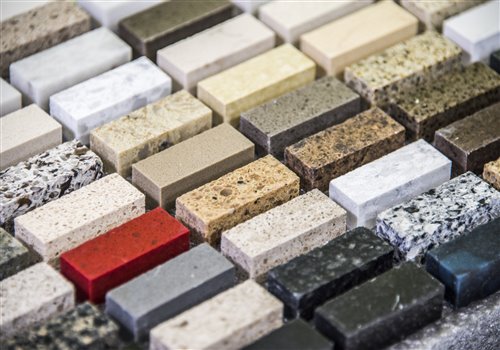
By utilizing the latest global technologies and optimizing formulations, Resitan Company has been able to produce product codes such as UP727/1 and UP747/7 with the minimum possible shrinkage by controlling the exothermic peak while maintaining the mechanical and chemical properties of the unsaturated polyester resins. Both afore mentioned grades provide desirable dimensional stability and surface quality in FRP/GRP parts, artificial stone, and laminated sheets while maintaining linear shrinkage below 4 percent.
References
- ASTM D2566: Standard Test Method for Linear Shrinkage of Cured Thermosetting Casting Resins During Cure.
- Strong, A. B. (2008). Fundamentals of composites manufacturing: Materials, methods and applications (2nd ed.). Society of Manufacturing Engineers.
- Mazumdar, S. K. (2001). Composites manufacturing: Materials, product, and process engineering. CRC Press.
- Mallick, P. K. (2007). Fiber-reinforced composites: Materials, manufacturing, and design (3rd ed.). CRC Press.
- Brydson, J. A. (1999). Plastics materials (7th ed.). Butterworth-Heinemann.
- Rosato, D. V., & Rosato, M. G. (2004). Reinforced plastics handbook (3rd ed.). Elsevier.
- May, C. A. (2018). (Ed.) Epoxy resins: Chemistry and technology (2nd ed.). Routledge.